
When it comes to preserving the durability and longevity of concrete structures, concrete waterproofing is…
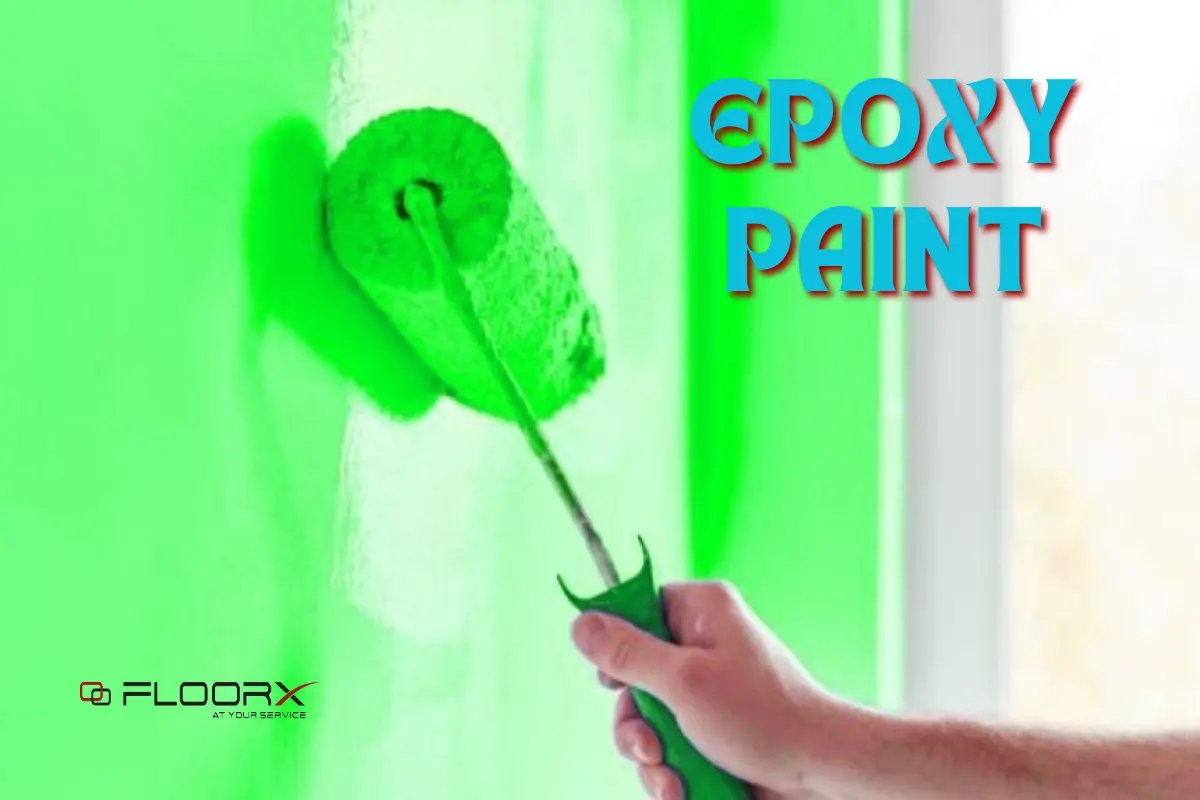
What is Epoxy Paint?
Epoxy paint is a high-performance coating made by mixing two components – an epoxy resin and a polyamine hardener – that chemically react and cure into a hard, seamless, chemical-resistant finish. Unlike ordinary paint, epoxy forms a thermoset plastic layer bonded permanently to the substrate. It’s used on garage floors, factory floors, hospital walls, marine vessels, pipelines, machinery, and anywhere that needs a durable protective coating.
If you’re a factory owner, contractor, or engineer in Bangladesh trying to decide whether to use epoxy paint or another coating, this guide covers the chemistry, applications, advantages, limitations, and pricing – all explained for our local conditions.
How Epoxy Paint Works – The Chemistry in Simple Terms
Epoxy paint is a two-component (2K) system. Component A is the epoxy resin – a viscous liquid with reactive epoxy groups. Component B is the hardener (or “curative”) – usually an amine-based chemical. When you mix the two parts in the correct ratio (typically 2:1 or 4:1 by weight, depending on formulation), a chemical reaction called cross-linking begins.
This cross-linking is irreversible – once cured, the epoxy cannot be re-melted or re-dissolved. The result is a three-dimensional polymer network with:
- High tensile strength (typically 4,000-10,000 psi)
- Excellent chemical resistance to acids, alkalis, solvents, salts, oils, fuels
- Strong adhesion to properly prepared concrete, metal, wood, and masonry
- Zero porosity – no absorption, no staining, easy to clean
- Electrical insulation in standard formulations (anti-static variants are conductive)
Standard epoxy paint (used as wall or floor paint) is typically 50-70 microns dry film thickness per coat. Industrial epoxy floor coatings are different – they’re applied at much higher thickness (1-6 mm) for heavy-duty service. If you need a true epoxy floor (not just paint), see our industrial epoxy flooring page.
Types of Epoxy Paint
1. Solvent-Based Epoxy Paint
The traditional formulation, dissolved in organic solvents. Dries by solvent evaporation then cross-linking. Strong smell during application. Durable but now restricted in many countries due to VOC (volatile organic compound) regulations.
2. Water-Based Epoxy Paint
Lower VOC, easier cleanup, suitable for indoor use where fumes are a concern. Slightly less chemical resistance than solvent-based but excellent for residential and commercial wall applications.
3. 100% Solids Epoxy Paint
Contains no solvents – what’s on the can becomes 100% of the cured film. Used for industrial floor coatings and high-build protective coatings. Highest performance, highest cost.
4. Anti-Static / ESD Epoxy Paint
Loaded with conductive fillers (carbon, metal fibers, or special conductive pigments) to provide controlled dissipation of static electricity. Used in electronics manufacturing, munitions facilities, and any spark-free environment.
5. Epoxy Primer
Thin, penetrating epoxy used as a bonding layer between substrate and topcoat. FLOORX always uses an epoxy primer before applying epoxy floor coatings, as direct application without primer is a common cause of delamination.
Where Epoxy Paint is Used in Bangladesh
Epoxy paint is one of the most versatile industrial coatings available. Common applications across Bangladesh include:
- Garage and basement floors – protects bare concrete from oil stains, makes cleaning easier, gives a finished look
- Warehouse and factory floors – high-build industrial epoxy coating, often 2-5 mm thick (different from paint)
- Hospital and laboratory walls and floors – chemical-resistant and easy to disinfect
- Water treatment plants – protects concrete tanks and pipes from chemical attack
- Marine vessels and docks – anti-corrosion protection in saltwater environments
- Oil and gas pipelines – external anti-corrosion coating
- Bridges and infrastructure – concrete protection against carbonation and chloride attack
- Food and beverage processing – wall coatings that withstand daily wash-down
- Workshop machinery – wear-resistant coating on equipment subject to abrasion
- Swimming pools and water features – water-resistant finish on concrete pool shells
Epoxy Paint vs Regular Paint – What’s the Difference?
| Property | Regular Latex Paint | Epoxy Paint |
|---|---|---|
| Cure mechanism | Water evaporation | Chemical cross-linking |
| Adhesion to concrete | Moderate – peels in traffic | Excellent – bonds permanently |
| Chemical resistance | Low | High |
| Abrasion resistance | Low | High (10-50x harder) |
| Water resistance | Low | Excellent |
| Durability | 2-4 years | 8-15 years |
| Cost per sqft (materials) | BDT 30-60 | BDT 100-300 |
| Skill required | DIY-friendly | Trained applicator |
| Shelf life | 5+ years | 1-2 years (pot life issues) |
The takeaway: if you need a decorative finish that lasts a few years, latex paint is fine. If you need a heavy-duty protective coating that lasts 10+ years in industrial service, epoxy paint is the answer.
Epoxy Paint vs PU (Polyurethane) Paint
Where epoxy really shines is on concrete floors – but on the floor of a factory, you also have a major alternative: polyurethane (PU) paint. Here’s how they compare:
Epoxy paint is harder and more abrasion-resistant – better for warehouses, parking decks, and areas with heavy wheel traffic.
PU paint is more flexible and UV-stable – better for outdoor areas, wet processing, and any surface that flexes or expands with temperature changes.
In Bangladesh’s tropical climate with significant thermal cycling, many industrial facilities – especially pharmaceutical, food processing, and cold storage – are now specifying PU over epoxy. For a detailed comparison, see our PU flooring in Bangladesh guide.
How Much Does Epoxy Paint Cost in Bangladesh?
Epoxy paint prices in Bangladesh depend on formulation, brand, and quantity:
- Wall and floor epoxy paint (water-based): BDT 250-450 per litre, covering ~30-40 sqft per litre at 2 coats
- Solvent-based industrial epoxy: BDT 350-650 per litre, covering ~25-35 sqft per litre
- 100% solids high-build epoxy: BDT 800-1,500 per litre, covering ~10-15 sqft per litre at 1mm thickness
- Anti-static epoxy paint: BDT 1,200-2,200 per litre
These prices are for materials only. Professional application typically adds BDT 80-150 per square foot for labor, surface preparation, and consumables – depending on substrate condition and project size.
Imported brands (Jotun, Hempel, PPG) cost more than local RESINOVA Novaseal formulations. For Bangladesh conditions and pricing, local formulations often offer 80-90% of the performance at 50-60% of the cost.
Common Mistakes When Using Epoxy Paint
After 17+ years of installations in Bangladesh, we have seen every epoxy failure mode. The most common mistakes:
- Insufficient surface preparation – applying epoxy over dusty, oily, or damp concrete guarantees failure. The substrate must be mechanically abraded (diamond grinding) and tested for moisture before application.
- Wrong mix ratio – every epoxy has a specific resin-to-hardener ratio. Even small deviations cause soft, sticky, or brittle coatings that fail prematurely.
- Applying too thick in one coat – thick coats trap solvents or generate exothermic heat, leading to bubbles, cracks, or improper cure.
- Ignoring ambient conditions – most epoxies require 15-30C and below 80% relative humidity to cure properly. Bangladesh’s monsoon humidity is a common cause of amine blush (a waxy surface film).
- No primer – skipping primer reduces adhesion by 50-70% and is the #1 cause of delamination.
- Mixing partial kits – if you don’t use the whole kit at once, the next batch cures differently. Always mix entire kits for consistent results.
Choosing the Right Epoxy for Your Project in Bangladesh
Ask yourself these four questions before selecting an epoxy paint:
- Substrate? Concrete, metal, wood, or masonry – each has a recommended primer.
- Exposure? Chemicals, water, mechanical loads, UV, thermal cycling.
- Aesthetic requirements? Solid color, decorative flake, metallic, anti-static.
- Budget and timeline? Some epoxies need 7-day full cure; others cure faster.
If you have a project in mind, FLOORX’s technical team can advise which epoxy system is right for your specific situation. Request a free consultation or call +880 1735 536 678.
Conclusion
Epoxy paint is the most reliable choice for industrial-grade protective coatings on concrete, metal, and masonry in Bangladesh. It’s more expensive than regular paint and requires skilled application, but the durability and protection are unmatched. For heavy-duty industrial floors where thickness exceeds 1 mm, look for a “high-build epoxy floor coating” rather than paint – the chemistry is similar but the application is specialized.
FLOORX has applied millions of square feet of epoxy coatings across Bangladesh – from pharmaceutical plants in Dhaka to garment factories in Gazipur, automotive workshops in Chittagong, and food processing facilities nationwide. If you’d like a professional epoxy installation, request a free site survey today.
{“@context”:”https://schema.org”,”@type”:”Article”,”headline”:”What is Epoxy Paint? Industrial Guide 2026″,”datePublished”:”2024-03-11T20:28:36+06:00″,”dateModified”:”2026-10-15T23:59:00+06:00″,”author”:{“@type”:”Person”,”name”:”FLOORX”,”url”:”https://floorxltd.com/author/floorx9t/”},”publisher”:{“@type”:”Organization”,”name”:”FLOORX Bangladesh”,”url”:”https://floorxltd.com”},”description”:”Epoxy paint combines resin + hardener to form a chemical-resistant, durable surface. Learn composition, applications, pros vs cons, and Bangladesh pricing.”}
{“@context”:”https://schema.org”,”@type”:”BreadcrumbList”,”itemListElement”:[{“@type”:”ListItem”,”position”:1,”name”:”Home”,”item”:”https://floorxltd.com/”},{“@type”:”ListItem”,”position”:2,”name”:”Blog”,”item”:”https://floorxltd.com/blog/”},{“@type”:”ListItem”,”position”:3,”name”:”What is Epoxy Paint?”,”item”:”https://floorxltd.com/what-is-epoxy-paint/”}]}
{“@context”:”https://schema.org”,”@type”:”FAQPage”,”mainEntity”:[{“@type”:”Question”,”name”:”What is epoxy paint?”,”acceptedAnswer”:{“@type”:”Answer”,”text”:”Epoxy paint is a two-part resin coating (resin + hardener) that cures to a chemical-resistant, durable finish. It bonds permanently to concrete, metal, wood, and masonry.”}},{“@type”:”Question”,”name”:”How much does epoxy paint cost in Bangladesh?”,”acceptedAnswer”:{“@type”:”Answer”,”text”:”Epoxy paint costs BDT 250-1,500 per litre depending on formulation. Materials alone run BDT 100-300 per sqft. Professional application adds BDT 80-150 per sqft.”}},{“@type”:”Question”,”name”:”How long does epoxy paint last?”,”acceptedAnswer”:{“@type”:”Answer”,”text”:”Properly applied epoxy paint lasts 8-15 years in light-traffic and 5-8 years in heavy industrial use.”}},{“@type”:”Question”,”name”:”Can epoxy paint be used on walls and floors?”,”acceptedAnswer”:{“@type”:”Answer”,”text”:”Yes. Water-based epoxy is ideal for walls; 100% solids high-build epoxy is best for floors.”}},{“@type”:”Question”,”name”:”What is the difference between epoxy paint and PU paint?”,”acceptedAnswer”:{“@type”:”Answer”,”text”:”Epoxy paint is harder and more abrasion-resistant. PU paint is more flexible and UV-stable. PU is preferred for outdoor areas, wet processing, and thermal-cycling environments.”}}]}
This Post Has One Comment
Comments are closed.
Related Posts
Informative article, totally what I was looking for.